Newchecker.in is an independent fact-checking initiative of NC Media Networks Pvt. Ltd. We welcome our readers to send us claims to fact check. If you believe a story or statement deserves a fact check, or an error has been made with a published fact check
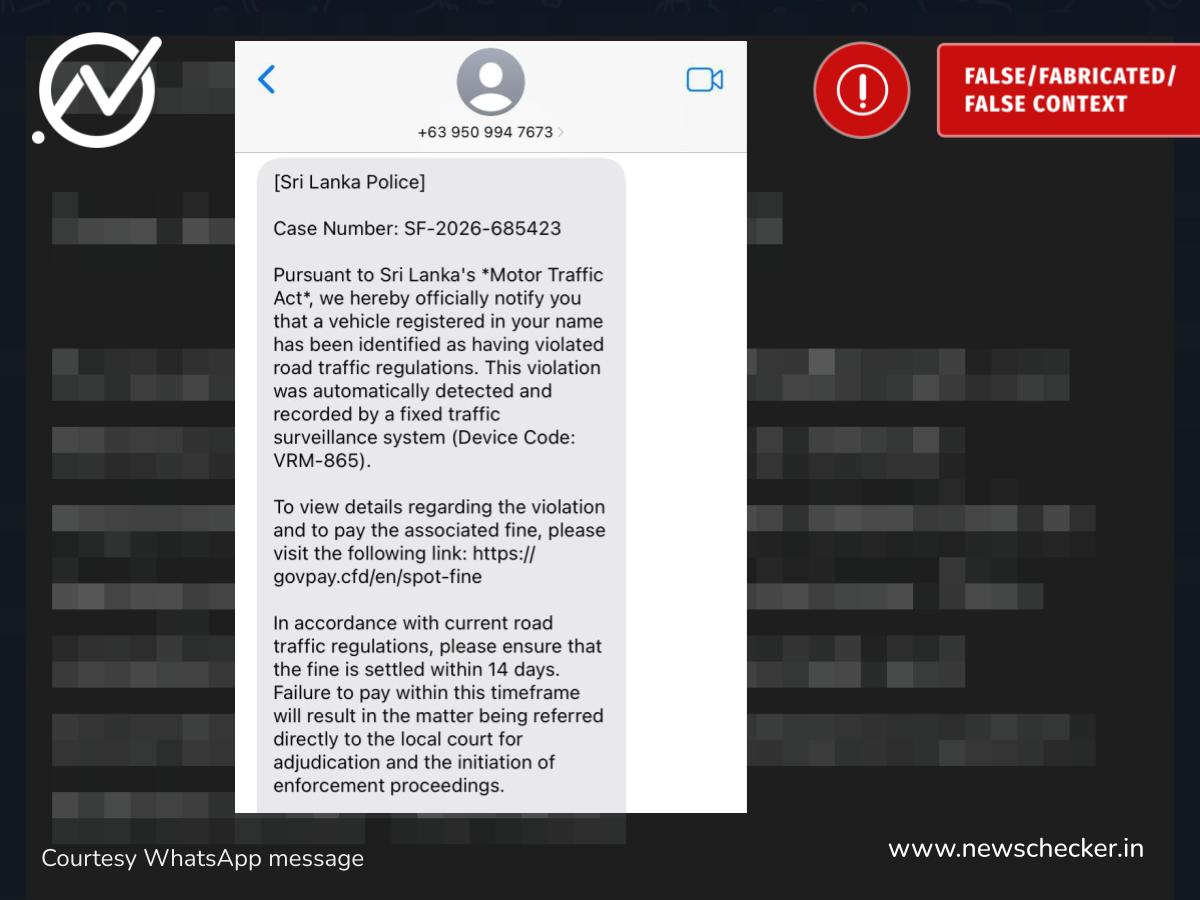
Phone messages notifying motorists of a “traffic violation” and requesting them to pay the penalty through a link similar to the GovPay system.
Fact
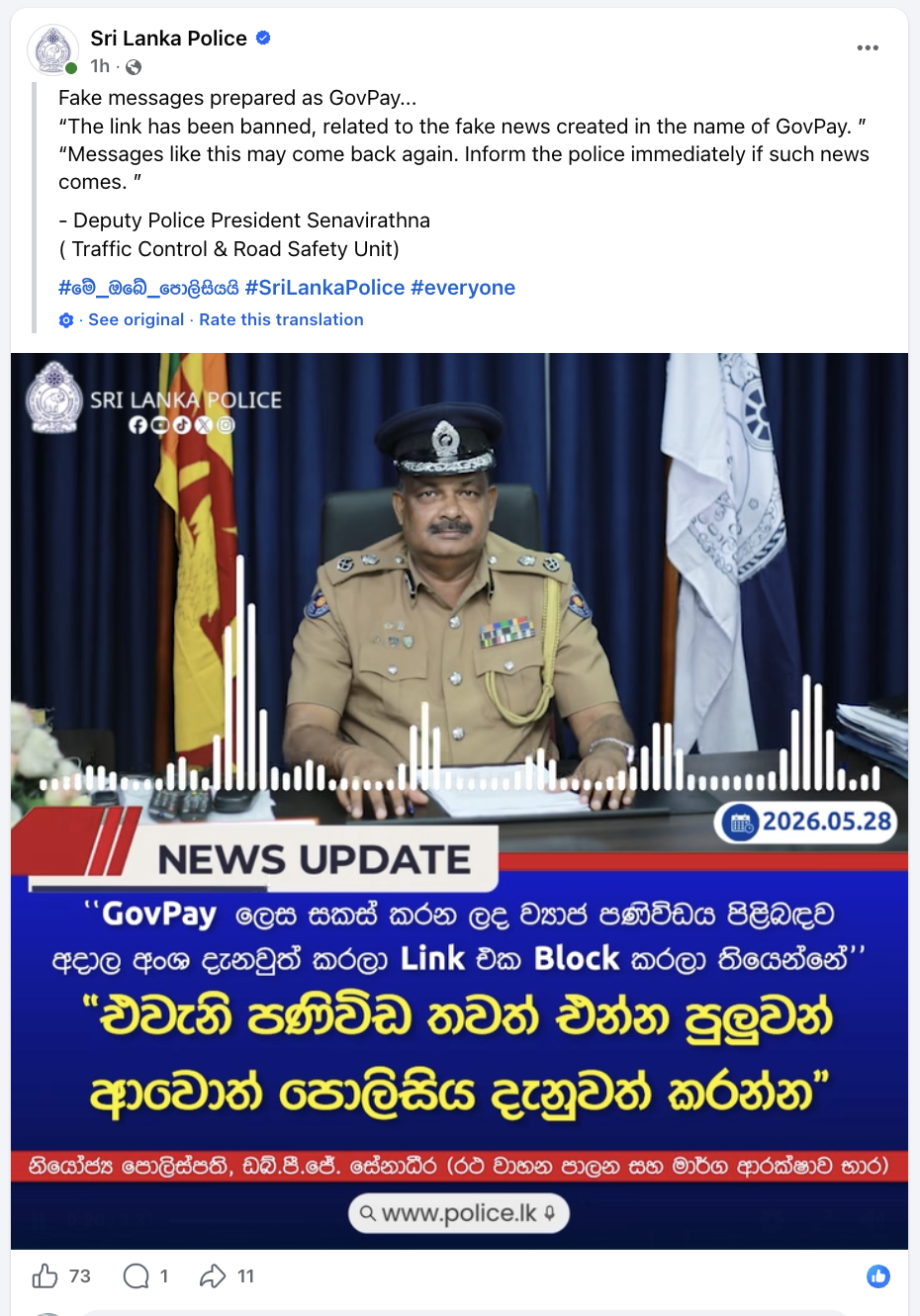
According to the Sri Lanka Police, these messages are a scam and motorists have been advised not to click on the links.
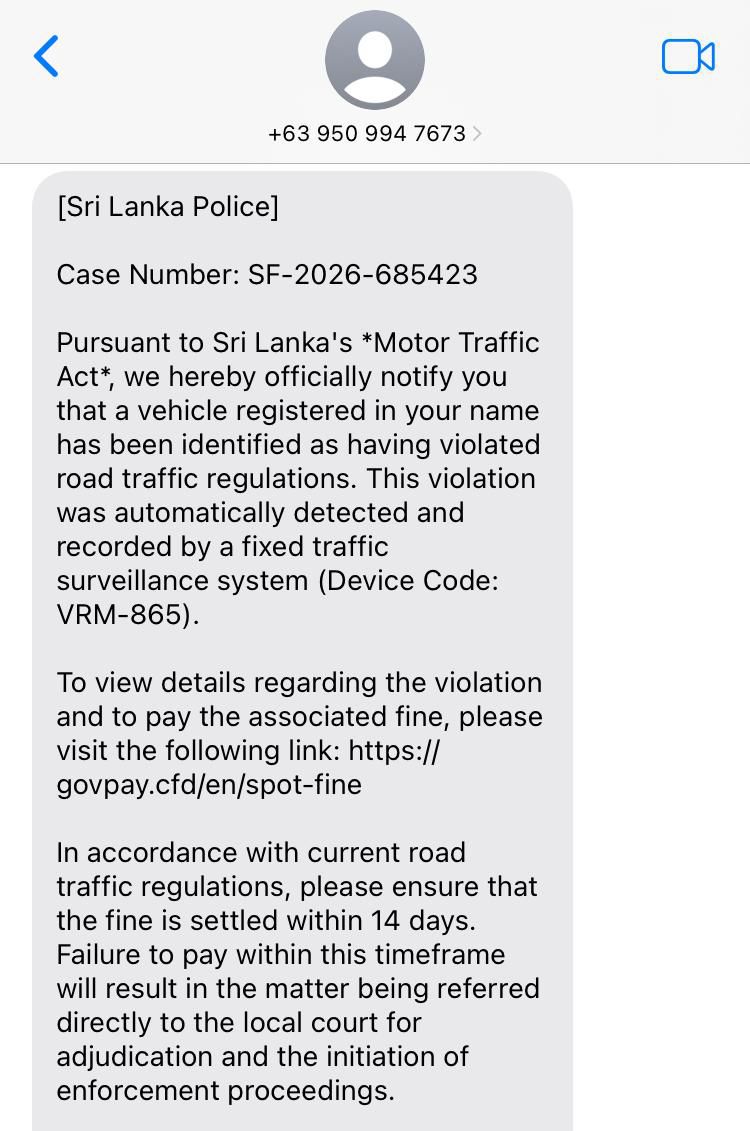
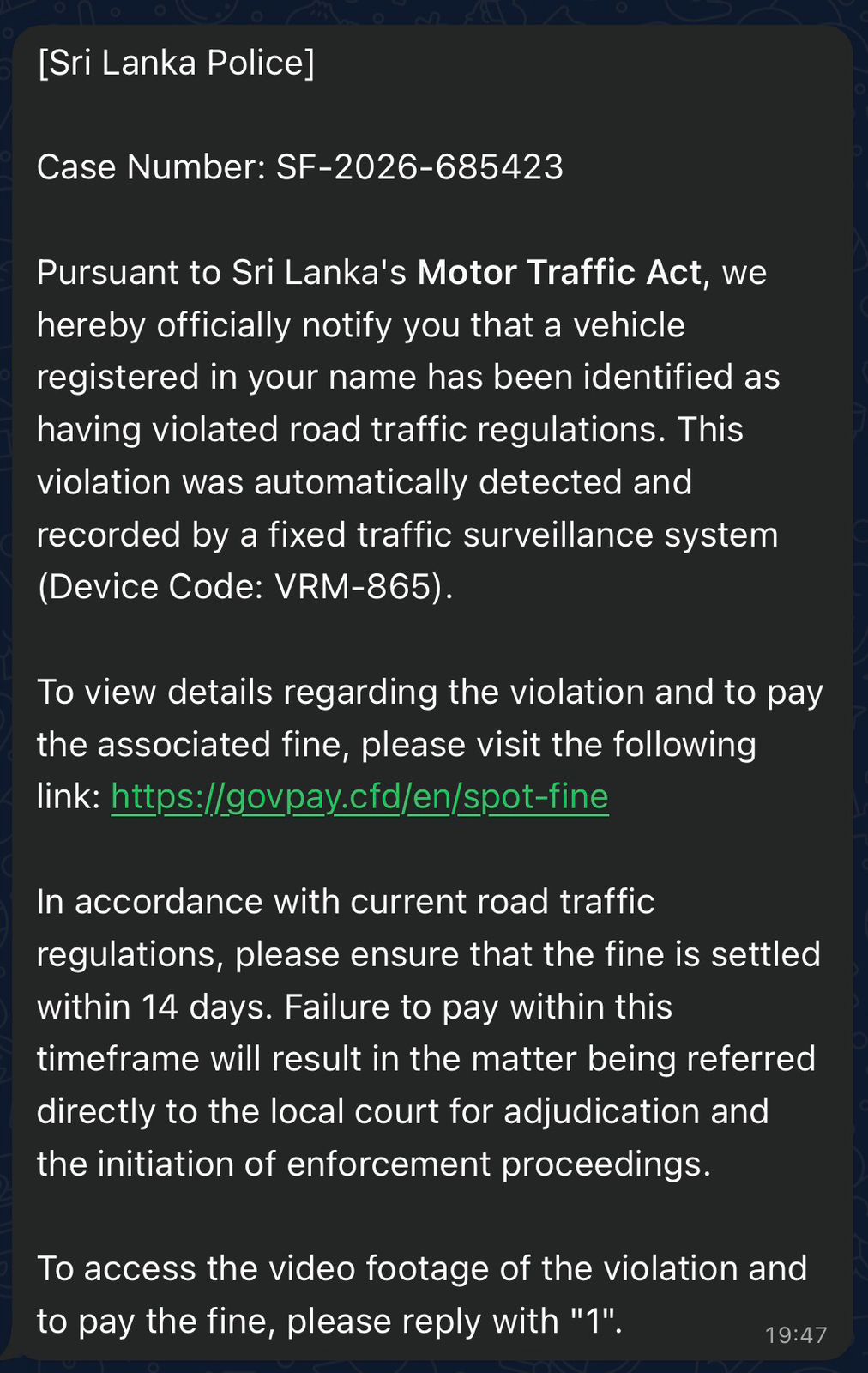
Several motorists are receiving messages on their phones, both through Whatsapp and SMS, notifying the recipients of a traffic violation and then directing them to pay a penalty.
Screenshot of messageScreenshot of message
These messages state that these traffic violations were automatically identified by “a fixed traffic surveillance system” (similar to CCTV cameras) and ask the motorist to settle the fine using a link that has “govpay” in the url. GovPay is the digital payment system the Sri Lanka Police uses when a motorist has to pay fines for traffic violations.
Given the suspicious nature of the message, Newschecker decided to check its veracity.
Evidence
We first noticed that the messages appear to originate from numbers with country codes such as +63, which is the Philippines, and not Sri Lanka, which uses +94. We also noticed that the messages do not specify any personal information about the motorist, such as their name, National Identity Card number, Driving Licence number, or the vehicle plate number.
2. We then looked into the official procedure the Sri Lanka Police uses in such cases of traffic violations flagged by automated surveillance systems. The procedure states that the software sends chargesheets, along with the video showing the relevant violation to the police stations in the police area where the drivers who committed the relevant traffic violations reside. Then the police station delivers the traffic violation notice to the residence of the person. This procedure has been confirmed by various other sources including mainstream media such as AdaDerana and The Sunday Times since February 2024, when the system started operating in the Colombo city and nearby suburbs.
It was evident that the above message circulating via WhatsApp and SMS contradicts this official procedure.
3. We also checked the url of the payment link closely and noticed that it states govpay.cfd instead of govpay.lk, which is the domain the Sri Lanka Police and other state institutions use.
4. We also noted that the Sri Lanka Police has issued a statement via their social media, website, and other mainstream media, specifically requesting motorists to not open such links, while reminding them of the official procedure used in similar cases of traffic violations.
Screenshot of Facebook post of Sri Lanka Police
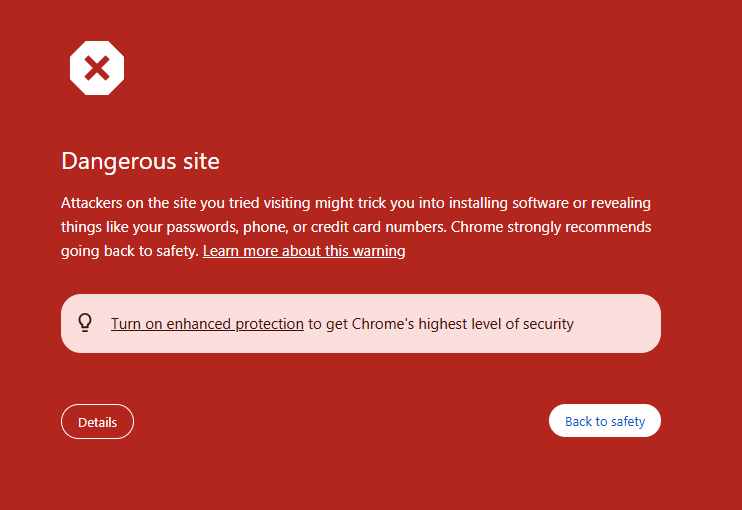
Moreover, the link in the message is now blocked, according to the media statement of the police. Also, when we looked up the website on Google Chrome, the ScamAdviser extension, which helps helps users determine the trustworthiness of websites, flagged it as “dangerous,” saying, “Attackers on the site you tried visiting might trick you into installing software or revealing things like your passwords, phone, or credit card numbers…”.
Screenshot of webpage linked in message
Verdict
SMS and WhatsApp messages being sent to motorists claiming they have committed traffic offences and requesting them to pay relevant fines via a link similar to the GovPay system are a scam. Motorists are advised not to click on the links.
FAQs
Q1. What does the message state? The message states that the recipient has committed a traffic offence which has been caught by automated traffic surveillance systems and that the fine needs to be paid using the GovPay link in the same message.
Q2. What is the GovPay payment link mentioned in the message? www.govpay.cfd
If you would like us to fact check a claim, give feedback or lodge a complaint WhatsApp us at +91-9999499044 or email us at[email protected]. You can also visit the Contact Us page and fill the form.