Newchecker.in is an independent fact-checking initiative of NC Media Networks Pvt. Ltd. We welcome our readers to send us claims to fact check. If you believe a story or statement deserves a fact check, or an error has been made with a published fact check
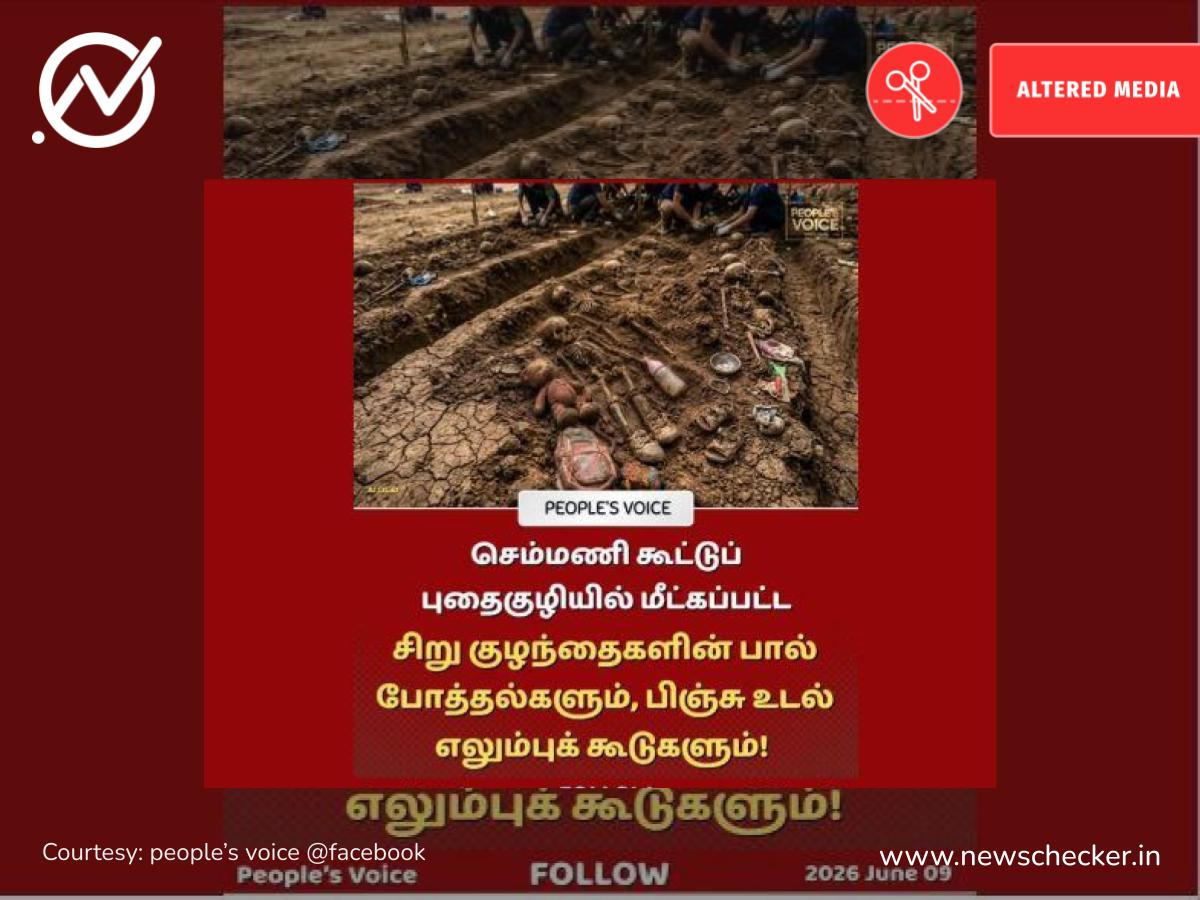
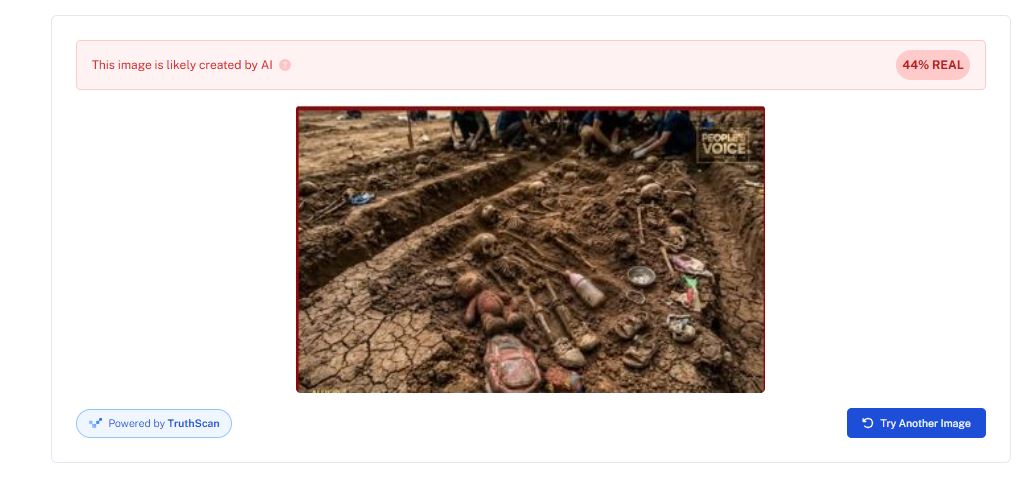
An image showing milk bottles, toys, small shoes, and school bags recovered alongside children’s skeletal remains during the ongoing Chemmani mass grave excavation.
Fact
The viral image is AI-generated.
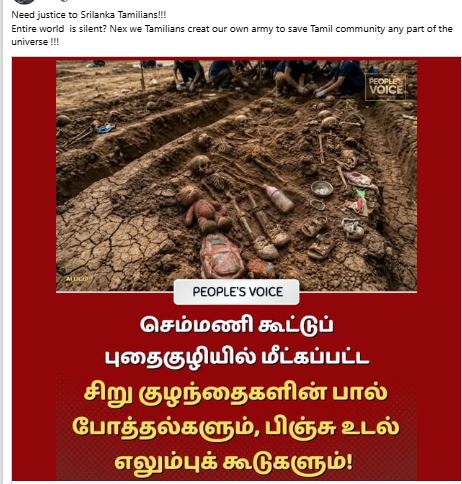
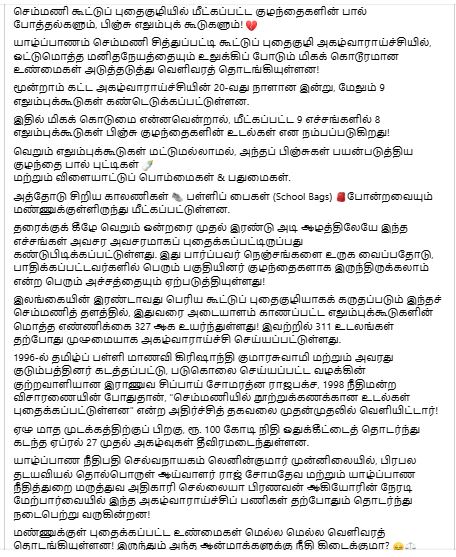
A viral Facebook post, sharing a purported photograph of a mass grave, claims that milk bottles, toys, small shoes, school bags, and skeletal remains of children were recovered on the 20th day of the third phase of excavation at the mass grave in Chemmani.
The viral post further claims that nine human skeletal remains were identified on June 9, 2026, of which eight were believed to be of children and that various personal belongings of children had also been unearthed from the site. The posts can be seen here and here.
Evidence
To verify the claim, we first checked whether any such artefacts were officially reported during the excavation on June 9, 2026.
News reports confirm that nine human skeletal remains were identified on the 20th day of the third phase of excavation on June 9, 2026, and eight of them are believed to belong to children. However, attorney Ranitha Gnanaraja, who represents the victims’ families in the Chemmani mass grave case, stated that out of the nine remains identified, eight were marked as children, while their exact ages could not be determined at the time of identification. She further stated that only a coin was identified as an associated artefact linked to the excavated remains on the 20th day of excavation.
We analysed the viral image and noticed several inconsistencies when compared with authentic photographs from the excavation site. The terrain shown in the image does not match the actual landscape of the Chemmani excavation area. In addition, the skeletal remains appear visually stylised, with characteristics commonly associated with AI-generated imagery rather than real forensic excavation photographs.
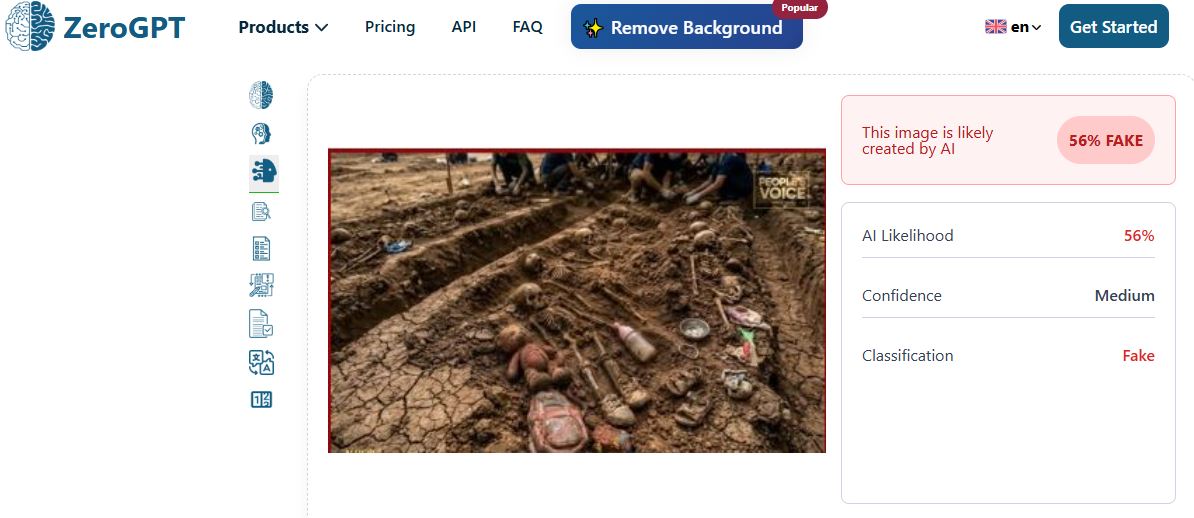
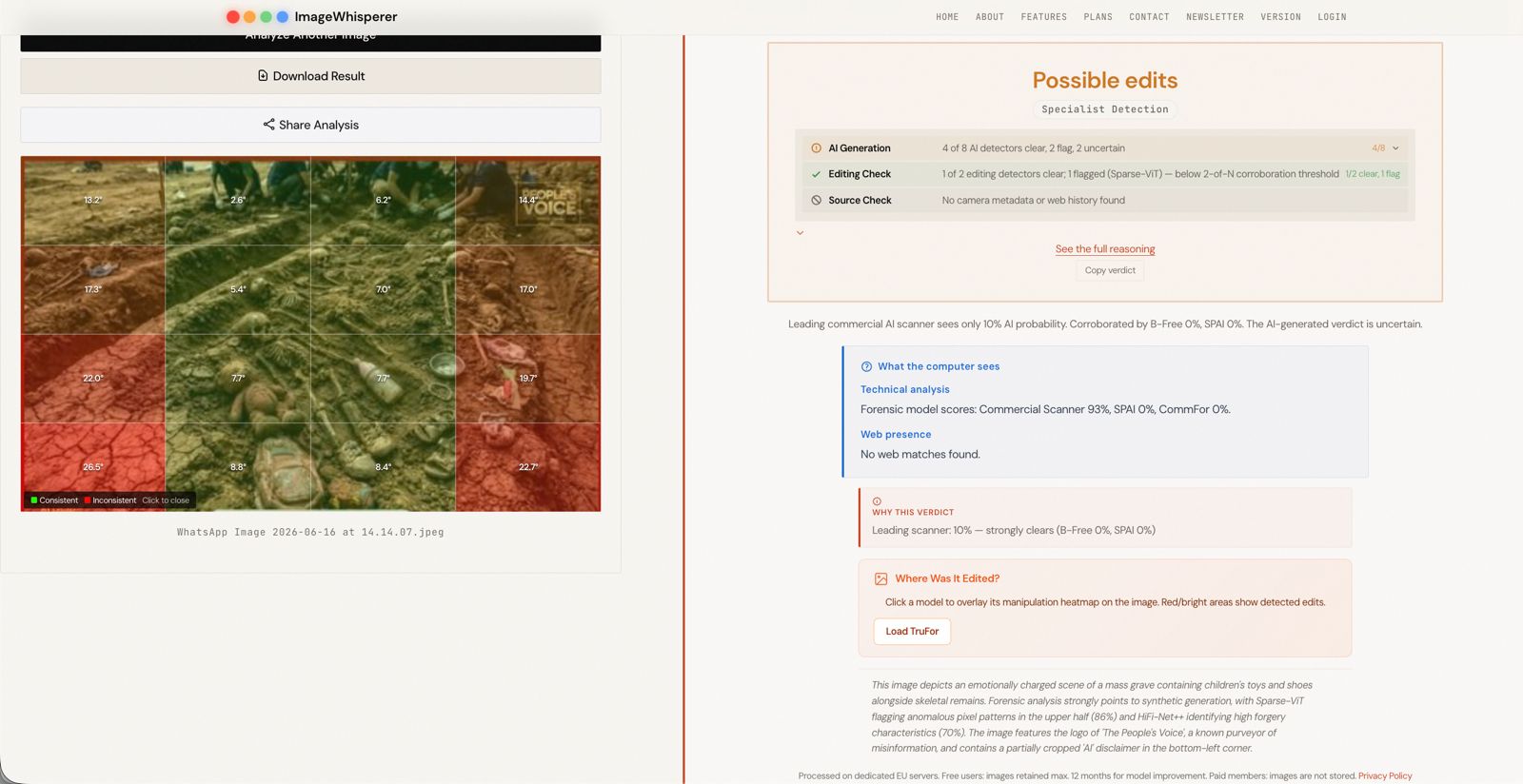
To further verify authenticity, we analysed the image using AI-content detection tools including ZeroGPT, Undetectable AI, and Image Whisperer. These platforms indicated that the image contains features consistent with AI-generated content.
We compared the viral image with verified video footage published by LANKA FILES covering the 20th day of the excavation, as well as photographs taken at the site by photojournalist Kumanan Kana. These authentic sources clearly differ from the viral image and confirm that it does not represent the actual excavation site.
Verdict
The viral image claiming to show baby milk bottles, toys, small shoes, school bags, and other artefacts that were recovered alongside children’s skeletal remains during the 20th day of the third phase of the Chemmani mass grave excavation is AI-generated. The only artefact reported on June 9, 2026, is a coin associated with one of the skeletal remains.
FAQs
Q1. Is the viral image from the Chemmani mass grave excavation? No. The image is AI-generated.
Q2. What artefact was actually reported on June 9, 2026? A coin was reported as the only associated artefact linked to one of the skeletal remains.
Q3. Were skeletal remains discovered on that day? Yes. News reports state that nine human skeletal remains were identified, including eight believed to belong to children.
Our Sources YouTube video published by LANKA FILES on June 9, 2026. News report published by Tamil Guardian on June 9, 2026. News report published by Newswire on June 9, 2026. Facebook post published by Kuman Kana featuring photographs from the Chemmani excavation site on June 9, 2026. DAN TV Prime Time news bulletin uploaded to YouTube on June 9, 2026. Image Whisperer Undetectable AI ZeroGPT
If you would like us to fact check a claim, give feedback or lodge a complaint WhatsApp us at +91-9999499044 or email us at[email protected]. You can also visit the Contact Us page and fill the form.